
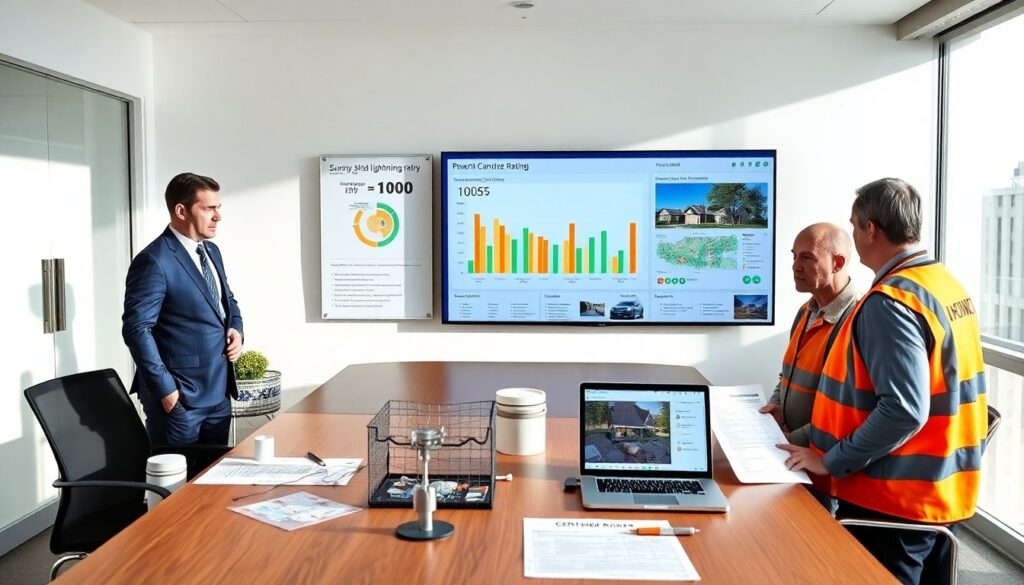
The sunny state paeqwrbt lightning acquire rating guides insurers and owners on lightning risk. It shows recent strike frequency, damage costs, and site vulnerability. Regulators use it to set premiums and disclosure rules. Consumers can read the rating to judge property risk. The rating combines weather data, claims history, and equipment resilience into one score. It helps readers decide on insurance, repairs, and risk reduction.
Key Takeaways
- The sunny state paeqwrbt lightning acquire rating evaluates lightning risk by combining strike frequency, claims history, and site vulnerability into a 0–100 risk score.
- Insurers use this rating to set premiums, prioritize inspections, and manage claims more efficiently, especially for high-risk properties.
- Property owners can reduce their rating by installing grounding systems, surge protectors, and lightning rods, and by maintaining these protections regularly.
- The rating promotes transparency and helps buyers, sellers, and lenders make informed decisions in real estate transactions.
- Local governments and small businesses rely on aggregated ratings to enhance community safety and manage insurance costs respectively.
- Documenting upgrades and working with insurers can help lower the sunny state paeqwrbt lightning acquire rating and insurance expenses over time.
What The PAEQWRBT Lightning Acquire Rating Is And How It’s Calculated
The sunny state paeqwrbt lightning acquire rating is a numeric index. It rates a location for lightning strike likelihood and expected damage. The agency that issues the rating pulls three data types. First, it uses recorded strike frequency from local sensors. Second, it uses historical insurance claims for lightning damage. Third, it assesses on-site features such as grounding, surge protection, and tall structures.
The rating uses a weighted formula. Frequency earns the largest weight. Claims history adds context on severity. Site features adjust the score up or down. The formula converts these inputs to a 0–100 scale. Higher scores mean higher risk. Lower scores mean lower risk.
Data collection runs on a fixed schedule. The agency updates sensor data monthly. Insurers must submit claims data quarterly. Site inspections occur every two years or after major storms. The combination of frequent updates and periodic inspections keeps the rating current.
The sunny state paeqwrbt lightning acquire rating also flags uncertainty. The system marks scores with a confidence band. A narrow band means data is consistent. A wide band means data is thin or recent changes occurred. Consumers should review both the score and the confidence band before they act.
The rating appears on property reports and insurer dashboards. It links to a short explanation of the inputs. It also lists recent lightning events that influenced the score. This transparency helps users see why the sunny state paeqwrbt lightning acquire rating changed over time.
How The Rating Affects Insurance, Claims, And Property Owners
Insurers use the sunny state paeqwrbt lightning acquire rating in three ways. They set premiums, shape coverage limits, and assign inspection priorities. Higher-rated properties face higher premiums or larger deductibles. Lower-rated properties get standard premiums and easier claims handling.
Claims staff use the rating during intake. A high sunny state paeqwrbt lightning acquire rating triggers automated checks for prior damage. It also prompts faster field inspections. Adjusters may look for wiring faults, grounding failures, and surge damage when the rating is high. This focus helps insurers reduce fraud and speed valid payouts.
Property owners feel the rating in their repair choices. A high sunny state paeqwrbt lightning acquire rating drives owners to install grounding rods, surge protectors, and lightning rods. Owners with low ratings may delay upgrades, but they still face risk if local strike patterns change.
Real estate agents and buyers use the rating in disclosure and negotiation. Sellers must report a property’s sunny state paeqwrbt lightning acquire rating in many jurisdictions. Buyers use the score to ask for price reductions or for seller-paid upgrades. Lenders also review the rating before loan approval for high-value properties.
Local governments use aggregated ratings to plan resilience. Municipalities spot high-risk neighborhoods by mapping sunny state paeqwrbt lightning acquire rating clusters. They then prioritize infrastructure work, such as grid upgrades and public building protections. That approach reduces community loss and supports public safety.
The rating also affects small businesses. Businesses with high sunny state paeqwrbt lightning acquire rating may face higher business-interruption premiums. They may also need to show mitigation steps to get critical coverage. That pressure leads to faster adoption of protective equipment in commercial buildings.
Steps To Improve Or Respond To A Low PAEQWRBT Rating
Property owners can lower the sunny state paeqwrbt lightning acquire rating with several clear steps. First, they can install or upgrade grounding systems. Grounding directs strike energy away from devices and occupants. A certified electrician should test grounding resistance and make repairs.
Second, owners can add whole-building surge protection. Surge devices sit at the main electrical panel and protect wiring and connected equipment. They reduce damage from both direct strikes and induced surges.
Third, owners can fit lightning rods on tall structures and ensure the rods connect to proper grounding. A rod does not stop a strike, but it gives the strike a safer path to ground and lowers damage to the building.
Fourth, owners can remove or relocate vulnerable equipment. Sensitive electronics and antennas should sit away from rooftop edges and tall metal structures. Owners should mount external devices on insulated supports and run protected conduit for wiring.
Fifth, owners can document all improvements and submit records to insurers and the rating agency. The agency will re-evaluate the sunny state paeqwrbt lightning acquire rating after it verifies upgrades. Proper documentation can lower the rating within a reporting cycle.
Sixth, owners should maintain equipment and repeat inspections after big storms. A single strike can damage grounding and surge devices. Regular checks keep protections working and help keep the sunny state paeqwrbt lightning acquire rating low.
Finally, owners can discuss options with insurers. They can ask for inspections that may qualify the property for a reduced premium. Insurers sometimes offer discounts for certified grounding and surge protection. The combination of upgrades, documentation, and insurer dialogue gives owners a clear path to lower the sunny state paeqwrbt lightning acquire rating over time.